Vale Roadworks and Diversions: How to Check Before You Travel
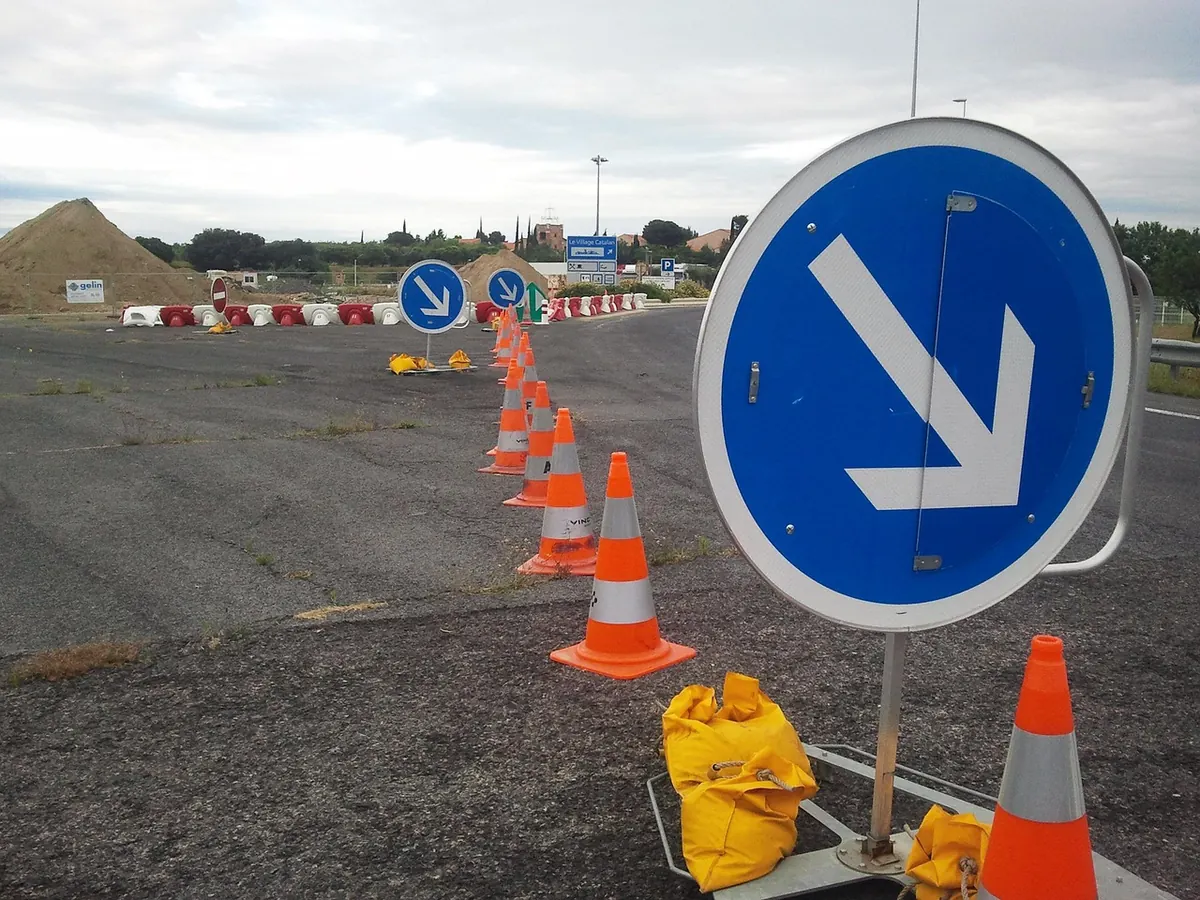
You are halfway down the drive when you see the barrier. Red and white plastic, a queue already forming, and a diversion sign pointing somewhere you have never had reason to go. The school run will not wait, and neither will the 07:42.
What stings is that the closure was almost certainly announced days earlier. Councils publish roadworks maps, utility companies file permits, and highway teams send out notices. The information exists — it simply is not sitting in your inbox unless you ask for it.
Here is where to look, how to read what you find, and how to build a short routine that keeps you ahead of the cones.
Start with the council's own roadworks map
Your local authority is the first stop. Most councils keep a roadworks or live traffic page with an interactive map you can search by street, postcode or town. Filters usually let you pick a date range, so you can see what is planned for next week as well as what is happening right now.
Two things are worth knowing. First, many councils publish their permit data through a shared national platform, often one.network, which means the same map can cover neighbouring authorities and works that straddle a boundary. Second, the map shows permits and notices rather than promises. A job listed for six weeks may finish in three, or run over if the weather turns.
What to look for while you are there
- Temporary traffic lights — usually the biggest cause of short, unpredictable delays.
- Full closures and their dates, even if they are a fortnight away.
- Works by utility companies as well as the council: gas, water, electricity and broadband jobs often cause the longest hold-ups.
- Anything marked as emergency or urgent, which appears with little warning and can last anything from a day to a fortnight.
- Bus stop suspensions, which tell you a route has changed even if the road itself looks open.
Remember that main roads are handled separately
Motorways and major A-roads are not the district council's responsibility. In England, National Highways publishes its own live map, a daily closures report and details of its official diversion routes. Wales, Scotland and Northern Ireland each have an equivalent traffic service.
This matters if your journey crosses a large junction. A council map will rarely show a motorway slip road closure, and a motorway closure will almost always push far more traffic onto the local roads you use every day.
Set up alerts so you do not have to keep checking
The habit that saves the most time is the one you only do once. Pick two or three sources, switch on notifications, and let them come to you.
- Create a saved area or email alert on your council's roadworks map, if it offers one.
- Sign up to National Highways or your national traffic service's updates if you regularly use a trunk road.
- Use a navigation app that takes live traffic into account, and set your home and work addresses so it can warn you before you leave.
- Follow your bus operator's service updates page. It is often the quickest confirmation that a route has been diverted.
- Join the community group for your area. Neighbours post photographs and timings long before an official update appears.
Use more than one. A single app can be slow to pick up a closure that started at seven that morning, and a council map will not know about a burst main that appeared an hour ago.
How to read a roadworks notice properly
Dates are windows, not appointments
A notice giving "from 3 March to 14 April" is usually the period the permit allows, not a description of continuous work. Contractors often arrive late, finish early, or return for a second visit once the surface has settled.
Diversions are designed for the largest vehicle, not the quickest car
Signposted diversion routes have to be usable by lorries, so they can be long and indirect. If you know the area, a shorter option may exist — but check that it is genuinely open first, or you will simply join a queue of drivers who had the same idea.
Read the access wording carefully
If a sign says "access only", it normally means access to properties inside the closed stretch — not a general shortcut for through traffic.
Residents, deliveries, carers and emergency vehicles usually keep access. Everyone else is expected to go round, and driving past the sign can land you with a penalty charge notice. If that happens, the wording of the order and the signage on the day both matter, so take proper advice rather than ignoring it.
Working out an alternative before you set off
The obvious parallel road is the one everybody else chooses. On the first day of a closure, give yourself fifteen extra minutes and treat it as a test run. Drive your alternative at the same time of day you would normally travel, because a route that is quiet at ten in the morning can be solid at half past eight.
Think about the knock-on effects too. A closed road can move a school's drop-off point, change where the bin lorry can reach, and fill the car park at the station or the surgery. If you have an appointment, ring ahead and ask where they would like you to park.
Please resist rat-running through residential streets. It is usually slower than it looks, it makes life difficult for the people who live there, and residents' parking schemes may mean you cannot stop anyway.
If you are already on the road
Do not pick up your phone to check. It is illegal to hold one while driving, and a glance at a map is not worth the risk. Pull over somewhere safe and legal — a car park, a lay-by, a side street — before you look. If the car has voice controls, or you have a passenger, use those instead.
A five-minute routine that works
- On Sunday evening, check the council map for the week ahead and note anything on your regular routes.
- Check the trunk road service if your journey uses a motorway or major A-road.
- Before you leave in the morning, glance at your alerts and your usual app.
- Allow a buffer on the first day of any closure, then adjust once you know how it behaves.
- Tell your household, and anyone who visits or delivers to you, what is happening.
- Report problems — an unfinished job, missing signs, a dangerous gap in the barriers — to the council or through a service such as FixMyStreet. It helps the next driver as much as you.
Roadworks are rarely a surprise to the people organising them. With a couple of saved alerts and one weekly check, they need not be a surprise to you either.
Photo: rf-ria / Pixabay